How a Ballroom Bustle Works
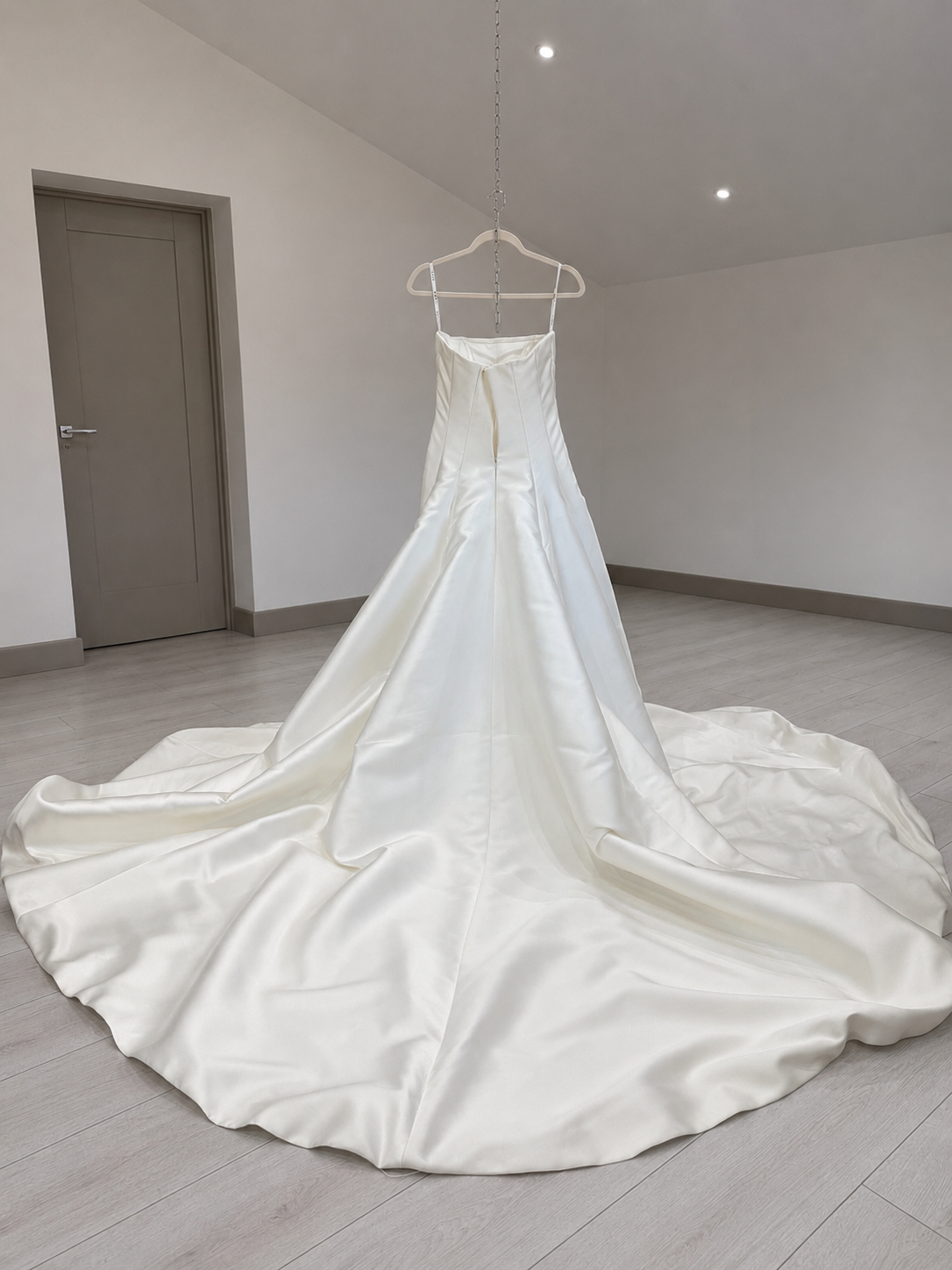
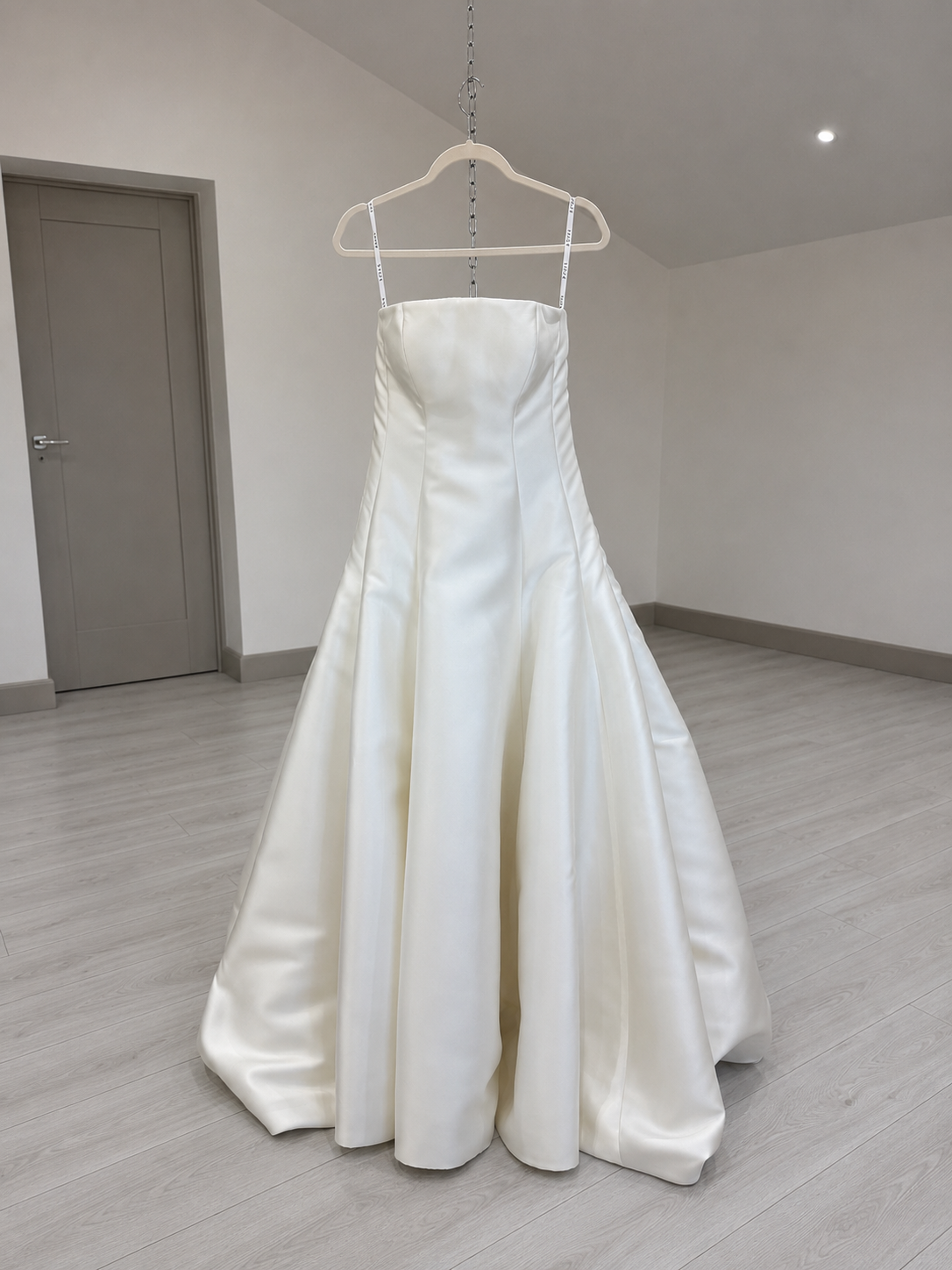
Satish recently bustled an Adler gown by KYHA Studios — a strapless dress with a trumpet-hem skirt that flares out dramatically below the knee.
The bride wanted to dance without her train underfoot, but a standard bustle wasn't going to work cleanly on this shape.
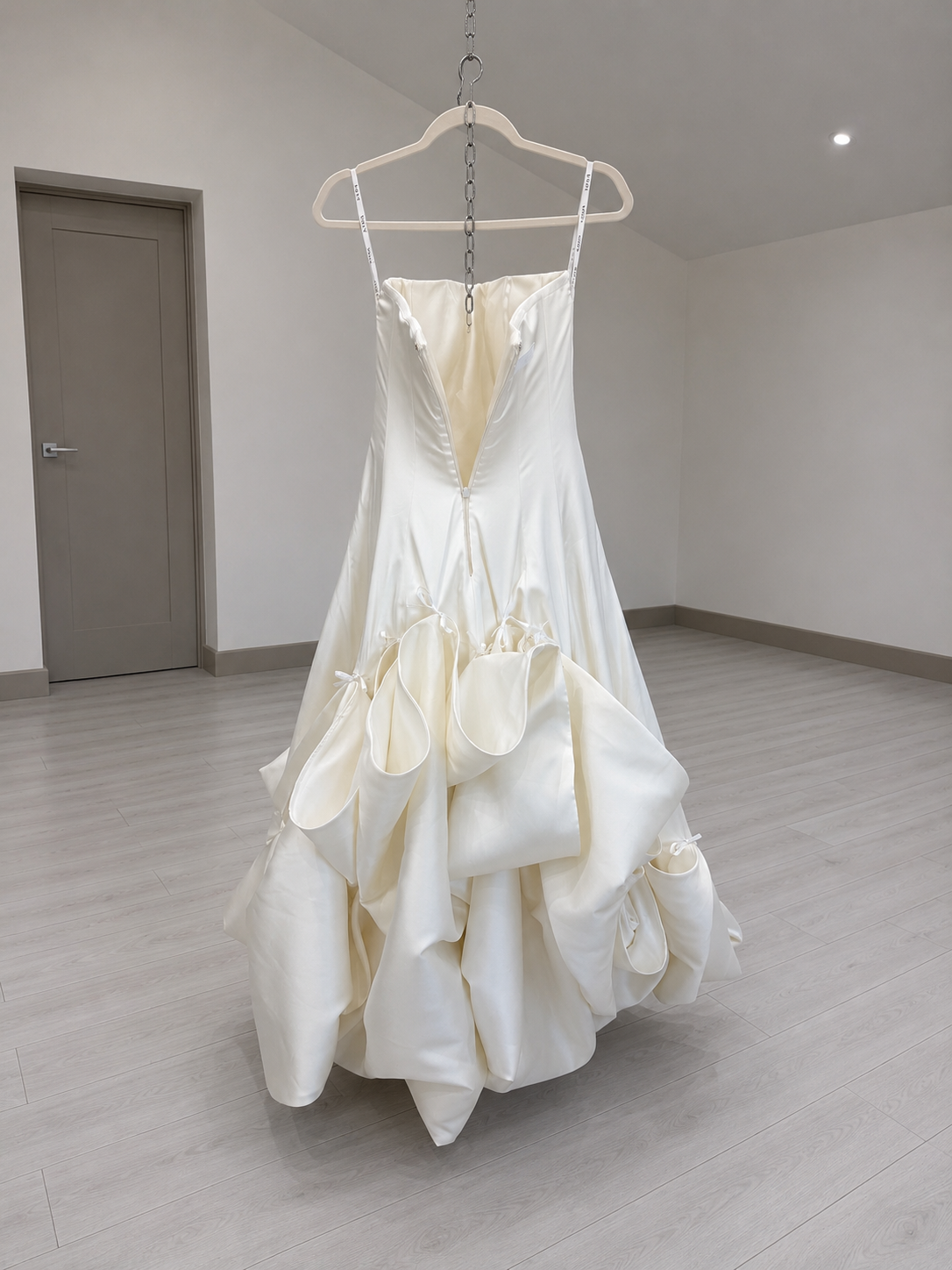
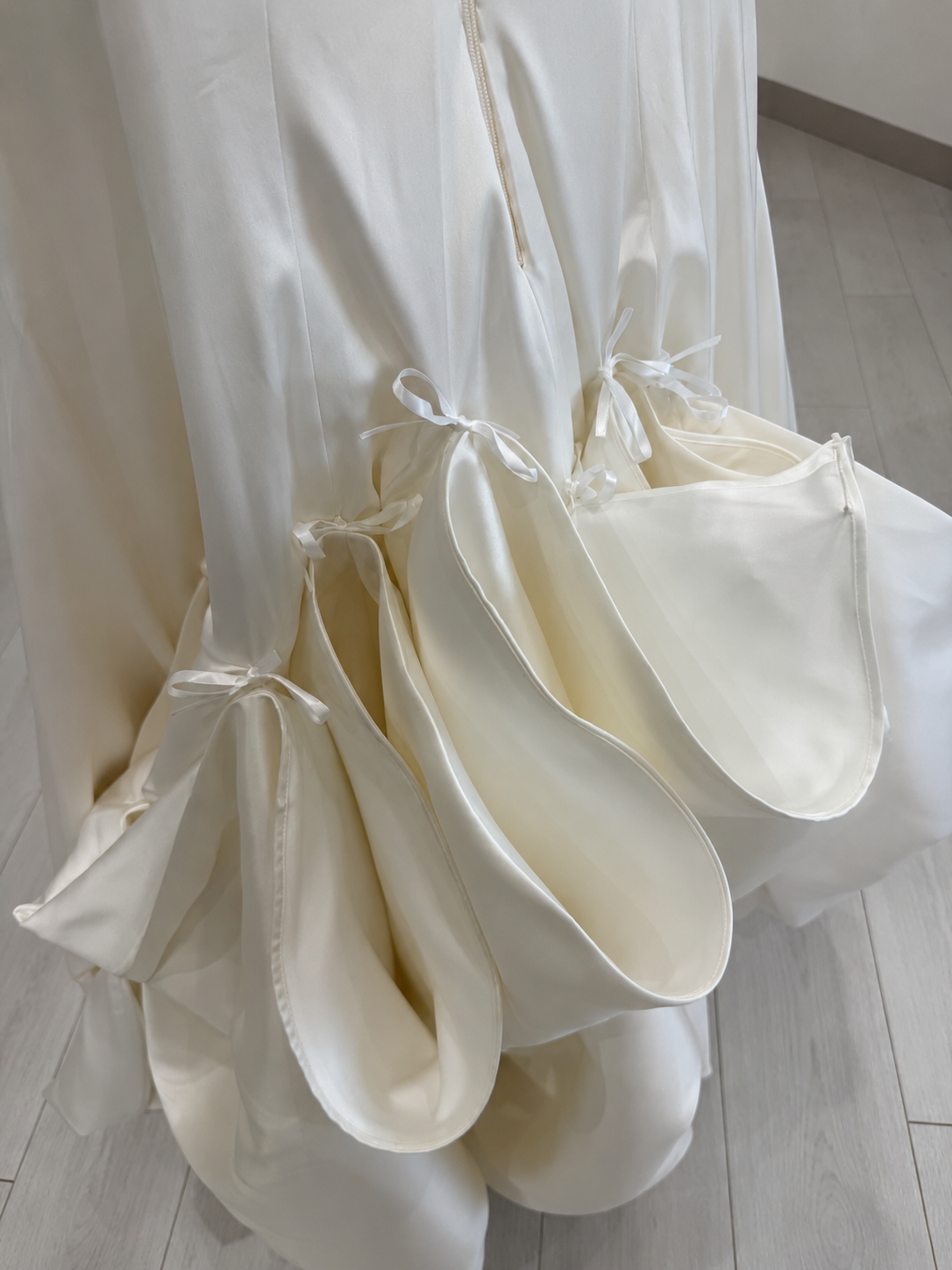
The trumpet skirt meant there was a lot of extra fabric volume gathered into a relatively small area at the hem, and the Mikado fabric — a structured, firm-bodied silk blend that holds a crisp line rather than draping softly — doesn't fold as forgivingly as a flowier fabric would. Getting the folds to sit flat and even, rather than bunched or lopsided, took a ballroom bustle: ribbons sewn into the interior seams, tied to lift the train up and hide it under the skirt.
If you're researching bustle options for your own dress, here's what a ballroom bustle actually involves.
What a ballroom bustle is
Most people picture a bustle as a row of hooks and loops (or buttons) on the outside of the dress, at the back of the skirt — you can see them if you look closely. That's usually called an American or pick-up bustle, and it's the most common type.
A ballroom bustle works differently. Instead of visible hardware, ribbons are sewn into the interior seams of the skirt and train. On the wedding day, those ribbons are tied together to gather the train up underneath the skirt, out of sight. From the outside, there's no visible fastening at all — just a slightly fuller, cleaner-falling skirt where the train used to trail.
The name comes from the result: a flatter, closer-to-body silhouette that's easier to move and dance in than a bustle with visible bulk sitting at the back.
Why brides choose a ballroom bustle over other types
- Cleaner look. No hooks or buttons visible from any angle, which matters most on dresses with delicate lace, illusion backs, or fabric where hardware would show or snag.
- Flatter silhouette. Because the train is drawn up and distributed under the skirt rather than folded onto the back, it tends to sit closer to the body — useful for dancing, sitting, and photos through the evening.
- Better suited to structured or heavier fabrics. Fabrics like Mikado, satin, or heavier lace hold their shape rather than collapsing softly, so a ballroom bustle's interior ribbons can control exactly where the fabric folds.
It's worth being honest about the trade-off: a ballroom bustle is more complex to construct and fit than a hook-and-loop version. Not every dress or fabric suits it, and it typically needs more careful fitting to get right.
How it's actually done
This is the part that's easy to gloss over in a quick description, but it's where the work actually is.
1. Mapping the anchor points. Satish works out where each ribbon needs to be sewn into the train's interior seams, based on how the fabric naturally wants to fold and how much fabric needs to be drawn up. On a trumpet-hem skirt like the Adler, this matters more than usual — there's a lot of flare to gather evenly, and getting the spacing wrong means the folds bunch unevenly on one side.
2. Sewing the ribbons in. Ribbons are hand-sewn into the seam allowances on the inside of the dress, positioned so they're invisible from the outside and strong enough to hold the weight of the fabric they'll be lifting.
3. Fitting and tying. This is where it's genuinely trial and error. The ribbons are tied and the train is lifted, then adjusted — tension, position, how each fold sits against the next — until the result looks deliberate rather than gathered up in a hurry. On a fabric like Mikado, which doesn't drape or soften easily, this step takes real patience to get the folds lying flat.
4. Setting the lift height. The train needs to clear the floor by enough to dance safely, but not so much that it looks obviously shortened when the bride is standing still and greeting guests. This is a judgement call made in person, not something that can be measured once and left.
Because of all this, a ballroom bustle usually needs more than one fitting to finalise — particularly on structured fabrics or dramatic skirt shapes, where the first attempt rarely sits perfectly.
What to ask about if you're considering one
If you're weighing up bustle options for your own dress, it's worth raising these with whoever is doing your alterations:
- Is my train length and fabric actually suited to a ballroom bustle, or would a different bustle style hold better?
- How many fittings should I expect before it's finalised?
- Can a ballroom bustle be added if the dress wasn't originally designed with one in mind?
- Will the ribbons and stitching be strong enough to hold up through a full evening of dancing?
Getting honest answers to these before your final fitting saves a lot of last-minute stress.
Satish has been fitting and adjusting bustles — ballroom, American, and everything between — for brides across London and Greater London since 2005, with Sunday fittings and insured pick-up and drop-off at your door.
London wedding dress alterations, at your door.